

Definition of Erectile Dysfunction
The problem of erectile dysfunction is a condition known in medicine as “erectile dysfunction,” which means that men cannot achieve or maintain sufficient erection for sexual intercourse. This disorder can cause serious problems in individuals’ sexual function and significantly reduce sexual satisfaction. Erectile dysfunction is not just a sexual problem; it can also have an effect on an individual’s overall health.
Symptoms include being unable to achieve an adequate erection during sexual intercourse, the inability to maintain an erection, and a decrease in an individual’s sexual desire. Erectile dysfunction can be seen in men of all ages; however, the frequency of occurrence may increase as one ages. Over time, this can damage individuals’ self-confidence and lead to problems in their relationships.
The underlying causes of this problem can be examined in two main categories: physical and psychological. While physical factors include conditions such as heart disease, diabetes, obesity, and hormone imbalances, psychological factors include emotional states such as stress, anxiety, and relationship problems. The erectile dysfunction problem can also arise as a result of these factors coming together. Therefore, the diagnostic process and treatment approach for each individual require an as comprehensive evaluation as possible.
Choosing the Right Doctor for the Hardening Problem
The problem of erectile dysfunction can be a challenging experience for many individuals, and consulting with the right medical expert to overcome this condition is of great importance. People experiencing the erectile dysfunction often first turn to urologists. Urology is a specialized field that deals with the diagnosis and treatment of the male reproductive system, and is considered the first step in evaluating the erectile dysfunction. Urologists can determine the most suitable treatment method for the individual by considering physiological and anatomical factors as well as the patient's overall health status.
However, it is important not to forget that the problem of erectile dysfunction is not only a physical issue. From time to time, this condition can have psychological origins. Therefore, consulting with specialists in psychiatry or psychology can also be beneficial. Psychological factors can significantly affect individuals’ sexual lives, and therefore consultations with a mental health specialist serve as a complementary element to the treatment process.
Furthermore, the endocrinology department plays an important role for many individuals experiencing erectile dysfunction. Hormonal imbalances can be a hidden cause of erectile dysfunction. Endocrinologists help restore this balance by assessing hormone levels and, if necessary, administering hormone therapy. Therefore, when erectile dysfunction occurs, it is best to turn to urologists, psychiatrists, and endocrinologists for treatment.
Application Process and First Interview
It is crucial for individuals experiencing the problem of erectile dysfunction to consult a doctor to address this situation. In this process, it would be beneficial for patients to make certain preparations before seeking the advice of a healthcare professional. The initial consultation is a critical step in understanding the patient’s condition and determining appropriate treatment options.
The first step in the application process is to select an appropriate healthcare provider and specialist doctor. Urologists or andrologists are usually the specialists who deal with erectile dysfunction issues. Patients can select a specific specialist by researching clinics in their area or through seemingly reliable references.
When going for the first appointment, there are some preparations that patients can make. First, it is important to record the symptoms and problems that occurred during the period of erectile dysfunction. These notes will help the doctor get a clear picture of the situation. Additionally, patients should also be prepared with information about their medical history, any illnesses they have had, the medications they are taking, and any existing health problems.
During the consultation, the doctor may ask detailed questions about the patient’s condition. These questions often include information about when the erectile dysfunction has been ongoing, whether there are any accompanying conditions, and the patient’s lifestyle. It is critical for patients to be honest and open about these matters in order to obtain an accurate diagnosis and the effectiveness of the treatment process.
Consequently, when seeking a doctor for the problem of erectile dysfunction, proper preparation will make the job easier for both the patient and the doctor. The initial consultation is not only a diagnostic process but also the beginning of the treatment journey.
Diagnostic Methods and Tests
The problem of erectile dysfunction is also referred to in the medical literature as erectile dysfunction, and it refers to the difficulties that individuals encounter in engaging in sexual intercourse or fulfilling their sexual desire. The correct diagnosis of the erectile dysfunction is made through various methods and tests. This diagnostic process involves investigating both physical and psychological causes.
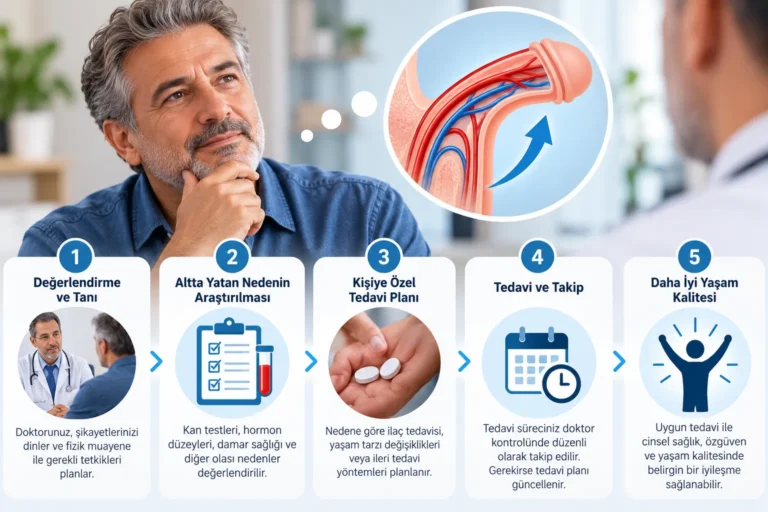
First, a comprehensive consultation with the patient’s doctor plays a guiding role in the treatment of erectile dysfunction. At this stage, the doctor inquires about the patient’s medical history, current health conditions, medications used, and lifestyle habits. This information provides an important observational framework for identifying the source of the problem.
Physical examination is another important component of the diagnostic process. During this examination, assessments are usually made regarding genital region, cardiovascular health, and other aspects. In some cases, doctors request blood tests to measure hormone levels, especially testosterone levels, thus investigating the effect of hormonal balance on erectile dysfunction.
Furthermore, hardening tests (such as the green-graded test) and advanced imaging methods such as ultrasound can be used as part of the diagnostic process. These tests assess the physical factors that affect blood flow and the formation of an erection. Additionally, a consultation with a psychologist or therapist may be recommended to consider psychological factors.
As a result, different tests and methods combined to diagnose the problem of erectile dysfunction help patients obtain the accurate information they need. Each of these methods is critical for understanding the root cause of the erectile dysfunction and developing an effective treatment process.
Treatment Options: Medications and Other Methods
The problem of erectile dysfunction is common among men and can be managed with various treatment methods. First, oral medications are the most commonly preferred treatment method. These medications help achieve an erection by increasing blood flow to the penis. Generally, PDE5 inhibitors such as sildenafil, tadalafil, and vardenafil fall into this category. Your doctor can recommend the most suitable medication based on your health and treatment history.
In addition to this, hormone therapy can also be an option. If the cause of the erectile dysfunction is hormonal imbalance, testosterone supplementation is considered. This type of treatment can be beneficial, especially for men who have been diagnosed with low testosterone levels. After relevant examinations have been conducted, your doctor will inform you about the necessity of hormone therapy.
Surgical intervention is often considered in cases where other treatment methods have failed. The placement of a penile prosthesis can offer an effective surgical solution for restoring sexual function. However, since this procedure is a more invasive approach, it is usually considered a last resort.
Additionally, some individuals may turn to alternative treatment methods. Methods such as acupuncture, psychotherapy, and natural supplements are also among the other options being researched to alleviate the erectile dysfunction problem. These treatment approaches can contribute to individuals’ overall health and quality of life.
The Importance of Lifestyle Changes
The problem of erectile dysfunction is a common disorder for many men, and it can be attributed to both physical and psychological reasons. Lifestyle changes play a critical role in managing this problem and supporting the treatment process. The recommended changes include a balanced and healthy diet. Revising eating habits can positively impact sexual health. In particular, a diet containing fruits, vegetables, whole grains, and healthy fats improves blood flow and can reduce the risk of erectile dysfunction.
Exercise is another important component of lifestyle changes. Regular physical activity reduces stress by increasing the release of happiness hormones such as serotonin and endorphins in the body. At the same time, exercise improves heart health and helps overcome erectile dysfunction by supporting blood circulation. Doing at least 150 minutes of moderate-intensity aerobic exercise per week is recommended to improve overall health. These exercises can include activities such as walking, running, cycling, or swimming.
Stress management also plays an important role in managing erectile dysfunction. High levels of stress can negatively affect sexual function by causing the body to produce hormones such as cortisol. Relaxation techniques such as meditation, yoga, or deep breathing exercises can reduce stress levels and support sexual health. Integrating these activities into your daily life will contribute to maintaining both mental and physical well-being.
Ultimately, the positive effects of lifestyle changes on erectile dysfunction are undeniable. Healthy eating, regular exercise, and effective stress management are the key to dealing with this problem. It should be remembered that implementing these changes will support sexual health and reduce the problem of erectile dysfunction.
Psychological Factors Associated with the Hardening Problem
The problem of erectile dysfunction is not solely caused by physical reasons; it can also be influenced by many psychological factors. This situation can directly affect men's sexual performance and ultimately lead to factors that negatively impact mental health, such as loss of self-confidence.
Stress, anxiety, and depression are the most common psychological causes of erectile dysfunction. Stress, which leads to constant pressure and mental fatigue, can directly affect sexual performance. Especially performance anxiety can cause the man to experience increased discomfort during sexual intercourse. This anxiety can deepen the erectile dysfunction problem, creating a vicious cycle.
In addition, past traumatic experiences are another important psychological source of this condition. In individuals who have experienced disturbing experiences during sexual intercourse, erectile problems may be more common. Such conditions can negatively affect an individual's mental health, causing them to develop more anxiety about the subject.
Mental health is an important factor that affects overall quality of life and relationship dynamics. The psychological burden that comes with erectile dysfunction can affect individuals’ overall levels of happiness. It is also possible for individuals experiencing this type of situation to experience difficulties in their communication with their partners. It is crucial for individuals to seek professional help during this process, both to maintain their mental health and to resolve the erectile dysfunction issue.
Follow-up of the Treatment Process
The problem of erectile dysfunction can have significant effects on male health. Regular follow-up of the treatment process is crucial for effective recovery. At the initial stage, the patient’s condition and the response to treatment should be periodically evaluated by the doctor. The frequency of these visits may vary depending on the individual treatment plan and the patient’s overall health status.
Generally, at the beginning of the treatment process, the doctor will recommend periodic check-ups. These check-ups can be adjusted based on the patient's response to the treatment. The first few visits are among the most critical periods of the treatment process. This is because this period offers a critical opportunity to assess the effectiveness of the treatment method and, if necessary, to turn to alternative treatment options.
In the evaluations conducted, the patient's sexual function, psychological condition, and overall health status should be taken into account. During this process, the doctor can assess the patient's medication use, lifestyle changes, and possible secondary effects to improve the success rate of the treatment. Additionally, necessary information should be provided to ensure the patient feels comfortable and to encourage active participation in the treatment process.
In addition, the patient's observations are also very important when it comes to evaluating the treatment response. In the treatment of a complex condition such as erectile dysfunction, it is essential to evaluate individual experiences in order to strengthen the communication between the doctor and the patient. This way, the patient can achieve more positive results by increasing their faith in the treatment process. In conclusion, the path to follow in the treatment of erectile dysfunction should be tailored and followed individually for each patient.
Result: Promising Information About the Problem of Erectile Dysfunction
The problem of erectile dysfunction is a situation that many men may encounter in their lives, and it often affects their psychological and physical health. However, there have been many promising developments in recent years regarding this issue. Individuals experiencing the erectile dysfunction problem should be aware that it is common. By realizing that they are not alone and that they can seek support in this regard, they contribute positively to their treatment processes.
Thanks to advancing medical technology, there are many treatment options available for the problem of erectile dysfunction. Alternative treatments such as psychotherapy, medication, hormonal therapy options, and surgical intervention are determined by specialists based on the needs of the patients. This diversity plays an important role in helping men overcome their problem.
Furthermore, early diagnosis is of great importance in resolving the problem of erectile dysfunction. When symptoms first appear, seeking medical advice allows the process to be managed quickly and effectively. Expert doctors recommend the appropriate tests and examinations, suggesting the correct diagnosis and treatment methods. This process is not only important for physical health but also for emotional well-being.
As a result, the presence of promising information regarding the erectile dysfunction problem encourages individuals to be more courageous about it. Becoming aware of treatment options will help overcome this problem. When necessary, individuals can find the treatment method that best suits them by utilizing educational resources.


 Türkçe
 English (UK)
 Deutsch
 Русский
 العربية
 Français
 Italiano