Orthopaedics and physiotherapy

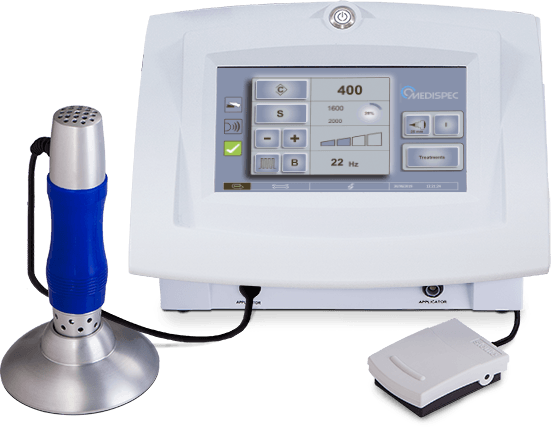
Radialspec™: radial wave therapy for orthopaedic conditions

A non-surgical radial wave therapy (RWT) system used for heel spurs, tendinopathy and chronic musculoskeletal pain.

In short: Radialspec is the radial wave therapy (RWT) device developed by Medispec for superficial chronic musculoskeletal conditions. It is used for heel spurs, tennis elbow and tendinopathies without anaesthesia or surgery.

What is radial wave therapy (RWT)?

Radial wave therapy is a non-surgical method that aims to treat chronic musculoskeletal problems with pressure waves spreading from the skin surface into the tissue. It is a type of extracorporeal shockwave therapy (ESWT) aimed at superficial tissues.

Main conditions treated with Radialspec

  • Heel spurs and plantar fasciitis
  • Tennis and golfer's elbow
  • Calcific shoulder (calcific tendinitis)
  • Achilles and patellar tendinopathy
  • Chronic muscle pain and trigger points

Features of Radialspec

  • Compact, portable design with touchscreen
  • High localisation accuracy without the need for imaging
  • Comfortable application without anaesthesia
  • Short treatment time
  • Very low consumable and maintenance costs
  • CE certified

For clinics

Radialspec enables orthopaedic, physiotherapy and sports medicine clinics to treat more patients per hour. For technical information and demo requests about the device, contact us.

Last updated: November 2026. This page was prepared by the Bold Sağlık editorial team for general information purposes and does not replace a medical examination.

Appointments and information

Contact us to find the ED1000 centre nearest you and arrange a preliminary consultation.

On this page

Frequently asked questions about Radialspec™

Radialspec is a radial wave therapy (RWT) device used for superficial chronic musculoskeletal conditions. It is manufactured by Medispec and is CE certified.

The main areas of use are heel spurs (plantar fasciitis), tennis elbow, calcific shoulder tendinitis, Achilles and patellar tendinopathy and chronic muscle pain.

No anaesthesia is needed. Mild discomfort may be felt during the application; the intensity is adjusted to the patient's tolerance.

The number of sessions depends on the condition. Several sessions at weekly intervals are usually planned; the decision rests with the doctor.